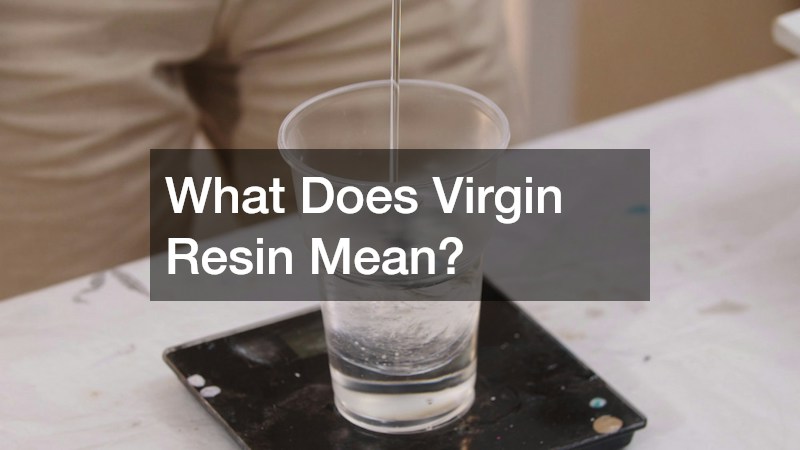
In the world of plastics and modern manufacturing, the term “virgin resin” is frequently encountered—yet its foundational role in global supply chains is often underestimated. At its core, virgin resin refers to plastic polymer that is synthesized directly from primary raw materials, such as crude oil or natural gas liquids, without ever having undergone prior industrial molding, consumer usage, or thermal reprocessing. Unlike recycled or reprocessed polymers, virgin resin enters the manufacturing line in a pure, molecularly pristine state, completely untouched by environmental degradation, additive contamination, or structural fatigue.
Why does this fundamental purity matter so significantly across the industrial spectrum? In high-spec manufacturing, material consistency is non-negotiable. Virgin resin provides an uncompromised molecular foundation that delivers exceptionally predictable mechanical properties—including precise tensile strength, thermal resistance, impact tolerance, and melt-flow indexes.
For engineers and product designers, this raw predictability ensures that every batch of material behaves identically during high-speed injection molding, blow molding, or extrusion processes.
As global industries navigate rising pressures surrounding environmental sustainability, regulatory compliance, and supply chain resilience, the dynamic between virgin resin and post-consumer recycled (PCR) materials has taken center stage. While circular economy initiatives push for higher recycled content, critical sectors—such as medical device manufacturing, food-grade packaging, aerospace engineering, and high-voltage electrical components—continue to rely on virgin resin to meet strict safety standards and performance benchmarks.
Understanding what virgin resin is, how it compares to alternative materials, and why its structural reliability remains indispensable is essential for evaluating the trade-offs between material performance, cost, and environmental stewardship in contemporary industry.
Understanding Virgin Resin
Virgin resin refers to a type of plastic resin that has never been used or processed before. It is in its original, unaltered form without any additives or contaminants. This pure state arises because virgin resin is manufactured directly from raw materials, predominantly composed of petroleum-based materials, through polymerization. The process ensures that virgin resin is of the highest quality and provides consistent properties, making it a preferred choice for manufacturers aiming for precision and reliability in their products.
The Significance of Virgin Resin in Manufacturing
The importance of virgin resin in manufacturing stems from its characteristics of purity and quality. As an unprocessed form of resin, it guarantees uniformity in terms of color, strength, and flexibility. This makes it an ideal option for applications where the performance of a product leaves little room for compromise, such as in the production of medical devices, automotive components, and food packaging. Consequently, the demand for virgin resin sales continues to soar as industries strive to meet their high-quality standards.
Comparing Virgin Resin with Recycled Resin
One of the key distinctions within the resin market lies between virgin resin and recycled resin. While virgin resin is derived from raw, unprocessed materials, recycled resin is obtained through the recycling of pre-used plastics. Recycled resin, although eco-friendly, may contain impurities and inconsistencies in quality due to prior usage and processing methods. These variations often make virgin resin a preferred choice despite the rising focus on sustainability.
Key Advantages of Virgin Resin
There are several advantages to using virgin resin in manufacturing and production:
- Consistency and Reliability: The uniform nature of virgin resin ensures consistent performance in products, essential for precision-dependent industries.
- Aesthetic Qualities: Virgin resin often exhibits better clarity and visual appeal, making it ideal for producing high-end consumer goods and packaging.
- Structural Integrity: Products made from virgin resin demonstrate superior strength and durability, benefiting sectors like aerospace and automotive manufacturing.
For these reasons, virgin resin sales continue to proliferate across various industrial sectors.
Challenges and Considerations
Although virgin resin provides numerous benefits, certain challenges accompany its use. The primary concern is often the environmental impact. The production of virgin resin involves the consumption of non-renewable resources and energy, contributing to environmental degradation. Thus, the virgin resin industry faces increasing pressure to balance the trade-offs between quality, sustainability, and economic viability.
Trends in the Virgin Resin Market
In recent years, the virgin resin market has experienced substantial growth due to its myriad applications. Technological innovations and the increasing emphasis on quality control are driving demand. As industries evolve, the scope for virgin resin sales continues to expand, with markets in Asia-Pacific leading the global demand.
Moreover, manufacturers are investing in research to develop more sustainable processes for virgin resin production. This includes advancements in biobased virgin resins formulated from renewable sources, which pave the way for reduced environmental impact without compromising quality.
The Future of Virgin Resin
Looking ahead, the future of virgin resin is poised to align with global sustainability goals. Manufacturers are expected to innovate ways to increase the recyclability of virgin resin products and reduce reliance on fossil fuels. Strategic partnerships between resin producers and industries could help expand the scope of virgin resin sales while addressing environmental concerns.
Virgin resin holds a pivotal role in the manufacturing world, heralding a balance between quality and innovation. Its advantages in consistency, reliability, and performance ensure unwavering demand across numerous industries. Despite the environmental challenges, proactive steps and technological advancements will determine its trajectory in the evolving concept of sustainability. Through continuous research and market expansion, the prospects for virgin resin sales remain robust in a world increasingly oriented towards precision-driven and sustainable solutions.